Torsion Springs vs. Extension Springs: Understanding the Options
Torsion Springs vs. Extension Springs: Understanding the Options
You hit the wall button, your garage door lets out a heavy groan, and nothing moves. If you look up, the culprit is usually staring right back at you: a tightly wound spring above the door, snapped cleanly into two pieces.
A broken garage door spring is one of the most common mechanical failures homeowners face. When it happens, your immediate focus shifts to understanding what goes into a professional repair, what factors drive the scope of the project, and how to choose a reliable service provider.
At A1 Affordable Garage Door Services, we prioritize complete transparency. This guide breaks down the core elements of garage door spring replacement, the key factors that influence the complexity of the job, and the vital safety details you need to know before booking a technician.
Torsion Springs vs. Extension Springs: Understanding the Options
Garage door counterbalancing systems generally rely on one of two spring types. Understanding which configuration your home uses is the first step in assessing a repair.
Torsion Springs (The Modern Standard)
Torsion springs are mounted horizontally on a metal shaft directly above the garage door opening. Instead of stretching, they use a twisting motion (torque) to balance the door's weight.
- Durability: Built to last, typically rated for 10,000 to 25,000 cycles.
- Mechanics: Because the installation process requires exact tensioning and specialized winding tools, the labor profile is more technical.
- Suitability: This setup is the standard for most modern residential properties and heavier double-car garages.
Extension Springs (The Traditional Setup)
Extension springs run parallel to the horizontal tracks on each side of your garage ceiling. They operate by physically stretching and contracting as the door moves.
- Durability: They feature a shorter operational lifespan and tend to fatigue faster than torsion systems.
- Mechanics: These systems are simpler to access, making the basic swapping process straightforward. However, they require careful calibration to ensure even pulling on both sides.
- Safety Note: They must be paired with safety cables running through the center to catch the spring if it snaps violently.
FeatureTorsion SpringsExtension SpringsPlacementMounted on a metal shaft directly above the doorInstalled along horizontal tracks on each sideLifespanLong-term reliability (High cycle rating)Shorter operational lifespan; faster wearOperationControlled twisting and torqueContinuous stretching and contractingLabor ProfileHighly specialized, precision tensioning requiredSimpler configuration but requires perfect balancing
Key Technical Factors That Drive Repair Scope
Every garage door system is unique, and several mechanical variables determine the exact scope of a professional replacement.
1. Door Size and Weight
A standard single-car garage door can weigh anywhere from 100 to 200 pounds, while a heavily insulated, custom double-car door can easily exceed 350 pounds.
- Material Requirements: Heavier doors dictate the use of thicker steel coils and higher-rated springs to safely lift the load.
- Labor Impact: Managing larger, heavier doors requires more time on-site to verify proper balancing and structural integrity.
2. Spring Count: One Spring vs. Two
Most double-car garages utilize a two-spring torsion system. If only one spring breaks, the surviving spring has still experienced the exact same amount of operational stress and is usually on the verge of failing.
- The Smarter Move: Professional technicians universally recommend replacing both springs during the same visit. This eliminates the need for a second service call and another system teardown just a few months down the road.
3. Secondary Hardware Wear and Tear
A spring replacement gives a technician a clear view of your door's entire lifting mechanism. High-tension components function as a single ecosystem, meaning a failure in one area often impacts another.
- Cables and Drums: Frayed lifting cables or cracked drums should be replaced immediately during the spring service.
- Bearings and Rollers: Warped center brackets or binding rollers put extra friction on your brand-new spring, causing it to wear out prematurely if left unaddressed.
Local Nuances: Independent Experts vs. National Chains
When searching for a local repair team in the Dallas-Fort Worth Metroplex—specifically across the Plano, Frisco, McKinney, and Allen corridors—how a business is structured matters.
- National Franchise Chains: Large corporate franchises often carry significant administrative overhead. To offset this, they frequently append hidden dispatch fees, travel surcharges, or mandatory hardware bundles that aren't disclosed in your initial phone conversation.
- Locally Owned Specialists: Local operators like A1 Affordable Garage Door Services pass the efficiency of regional operations back to the customer. By focusing purely on North Texas communities, local teams provide same-day response times and clear, line-item breakdowns without corporate markup.
The Reality of DIY Spring Replacement: Genuine Risks
CRITICAL SAFETY WARNING: Garage door springs store an immense amount of mechanical energy. When a spring snaps or releases unexpectedly during a DIY attempt, it can throw heavy metal components or winding bars with enough force to cause severe trauma, fractures, or deep lacerations.
For homeowners evaluating whether to handle this project themselves, consider the minimum baseline requirements for a safe repair:
- Specialized Tooling: You must use hardened-steel winding bars perfectly matched to your spring's cone size. Utilizing makeshift tools like screwdrivers or pliers is the leading cause of DIY installation injuries.
- System Disengagement: The opener must be fully powered down and the door completely secured to prevent it from crashing down during the replacement.
- Precision Engineering: Sourcing a replacement requires tracking the door's exact weight, track radius, and spring dimensions. Installing an improperly rated spring will rapidly burn out your garage door opener motor and create an dangerously unbalanced system.
For the vast majority of homeowners, hiring a certified technician ensures the door is balanced, tensioned safely, and backed by a operational safety check.
Spotting Red Flags in a Service Estimate
A reputable garage door service company will always give you complete clarity before turning a single wrench. Protect yourself by looking out for these common estimation warning signs:
- The Vague Line Item: Avoid quotes that simply state "Fix Garage Door" without breaking down hardware specifications, labor time, and underlying component conditions.
- Low-Cycle Substitutions: Be wary of unusually cheap offers that utilize low-grade, short-cycle springs. These sub-par parts often lose tension or snap within a year or two, forcing you to pay for labor all over again.
- High-Pressure Tactics: If a technician pressures you to sign off on an entire system overhaul before explaining what is broken, pause the job.
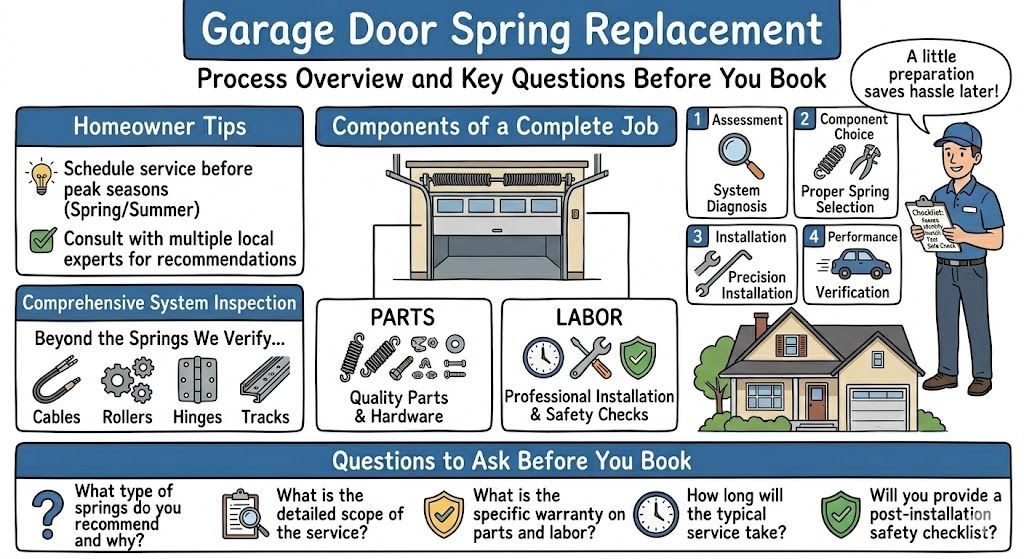
5 Questions to Ask Before Approving Work
- What specific cycle rating and brand are these replacement springs?
- Is the labor fully covered in this written estimate, or are there separate trip fees?
- Do you inspect the lift cables, drums, and center bearings as part of this service?
- What explicitly is covered under your parts and labor warranty?
- Will you provide a fully itemized, written copy of this estimate before starting the repair?
Fast, Reliable Spring Repairs Without the Guesswork
If your garage door is currently stuck or acting up, getting it running smoothly shouldn't feel like a guessing game. By identifying your spring type, prioritizing preventative dual-spring replacement, and working with a transparent local provider, you can safely resolve the issue for the long haul.
For homeowners throughout Plano, Frisco, McKinney, and Allen, A1 Affordable Garage Door Services offers immediate, same-day relief with upfront, itemized estimates. No hidden dispatch fees, no high-pressure upsells—just experienced technicians dedicated to keeping your home secure.
Explore our Garage Door Repair Blog & Tips for proactive maintenance advice, or reach out directly to book an inspection today.