It always happens at the worst possible moment. You’re already five minutes late for work, or you’re locking up the house for the night, you press the button, and… nothing. Or worse, the garage door starts to head down, changes its mind halfway, and rolls right back up.
Before you panic and call a repair technician out for an emergency service fee, take a deep breath. A garage door that refuses to close is incredibly common, and a lot of the time, the fix takes less than two minutes.
Here are
5 quick things to check right now to see if you can solve the mystery yourself.
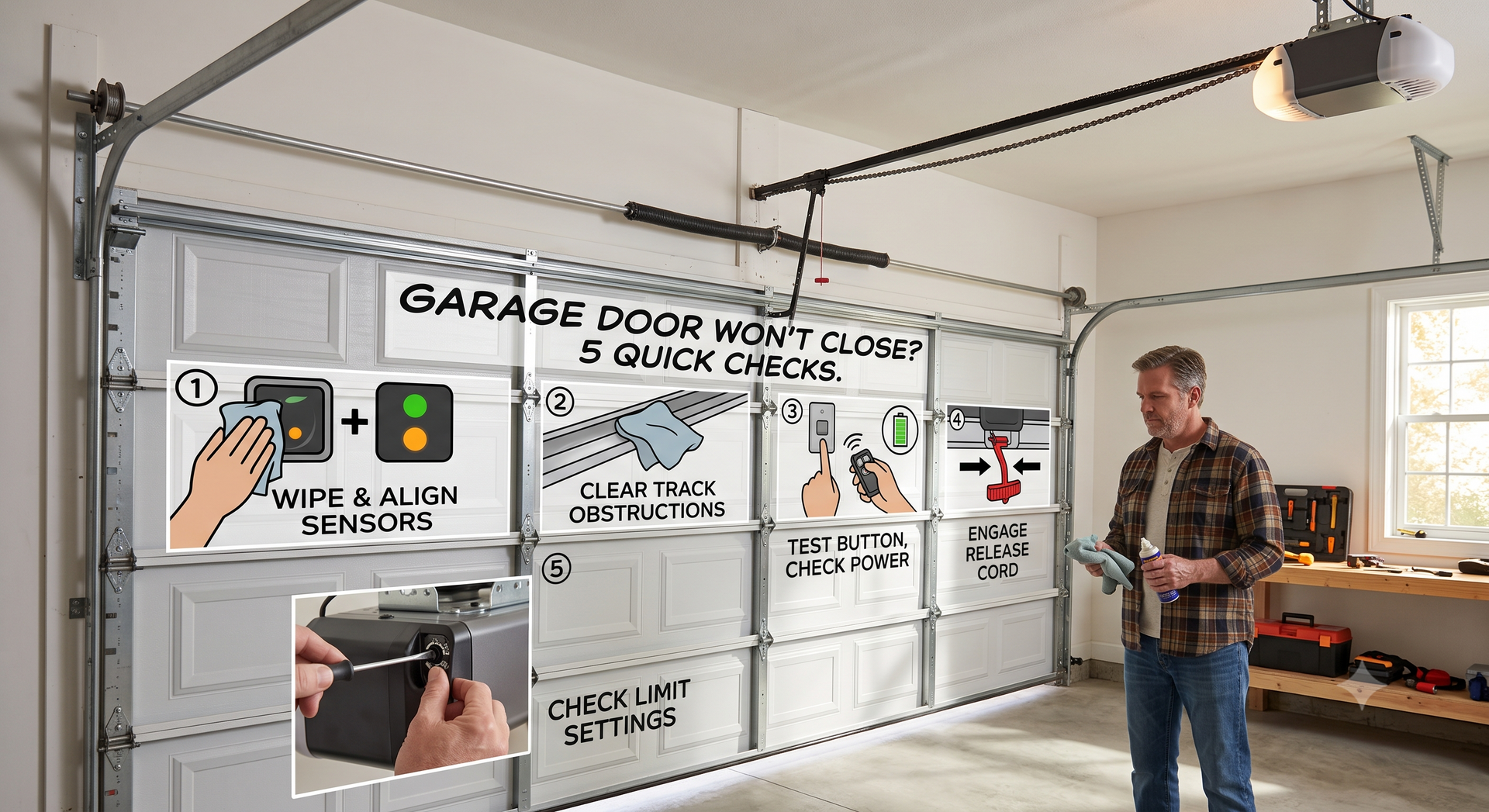
1. Inspect the Safety Sensors (The Photo-Eyes)
By far, the most frequent culprit behind a door that won't shut is the safety sensor system. These are the two small electronic "eyes" located on either side of the door track, about six inches off the ground. They project an invisible infrared beam across the opening; if anything breaks that beam, the door will automatically reverse to prevent crushing something.
- Look for the lights: Both sensors should have a solid LED light glowing (usually one is green, one is amber). If one is blinking or completely dark, they are out of alignment.
- The Fix: Gently nudge the misaligned sensor with your hand until the light goes solid.
- Check for dirt: If they are aligned but still blinking, wipe the lenses gently with a microfiber cloth. A simple spiderweb or a layer of dust can trick the sensor into thinking an object is in the way.
2. Scan the Tracks for Hidden Obstructions
Garage doors are highly sensitive to resistance. If the opener senses even a little bit of friction, it will roll back up as a safety precaution.
- Look for physical blocks: Walk the length of both tracks. Did a broom handle fall into the path? Is a stray toy wedged in the track?
- Look for debris build-up: Over time, hardened grease, dirt, and dead leaves can accumulate in the tracks, jamming the rollers.
- The Fix: Clear out any objects and wipe down the inside of the tracks with a damp rag to ensure a smooth pathway.
⚠️
Pro Tip: Never use heavy grease or WD-40 on your garage door tracks. It actually attracts dirt and creates a sticky sludge that will cause more jams down the road. Stick to a dedicated silicone or lithium-based garage door lubricant.
3. Test the Remote vs. The Wall Switch
Sometimes the issue isn't mechanical at all—it’s electrical. You need to determine if the door can’t close, or if it just isn't getting the signal to close.
- Try the wall button: Go inside and press the hardwired wall console. If the door closes perfectly fine from the wall but ignores your remote clicker, the door itself is healthy.
- The Fix: You likely just need a fresh pair of batteries in your remote. If that doesn't work, the remote may have lost its programming to the opener unit, or the lock feature on your wall switch might have been accidentally turned on.
4. Check the Manual Release Cord
Did someone recently pull the emergency red cord to open the door during a power outage? If so, the automated carriage might be disconnected from the door itself. You'll hear the motor running up in the ceiling, but the door will stay completely still.
- The Fix: Manually pull the door down until it clicks back into the opener mechanism, or pull the red cord back toward the motor to re-engage the trolley. Once it locks back in, try using your remote again.
5. Check the "Down Travel" Limits
If your garage door goes all the way down, hits the concrete floor, and immediately bounces back up like a basketball, your "travel limit" settings are slightly off. The opener thinks the ground is an obstacle because it's being forced to push down just a fraction of an inch too far.
- The Fix: Look at the side or back of your garage door opener motor hanging from the ceiling. You will see two dials or buttons labeled "Travel" or "Open/Close Limit." Using a flathead screwdriver, turn the "Down" limit dial slightly in the negative direction (usually counter-clockwise) to tell the door to stop just a tiny bit sooner.
When It’s Time to Call in the Experts
If you’ve checked all five of these steps and your door is still acting like a stubborn mule, the problem is likely deeper under the hood.
If you notice
snapped cables frayed like old rope, a
visible gap in your heavy metal spring, or the
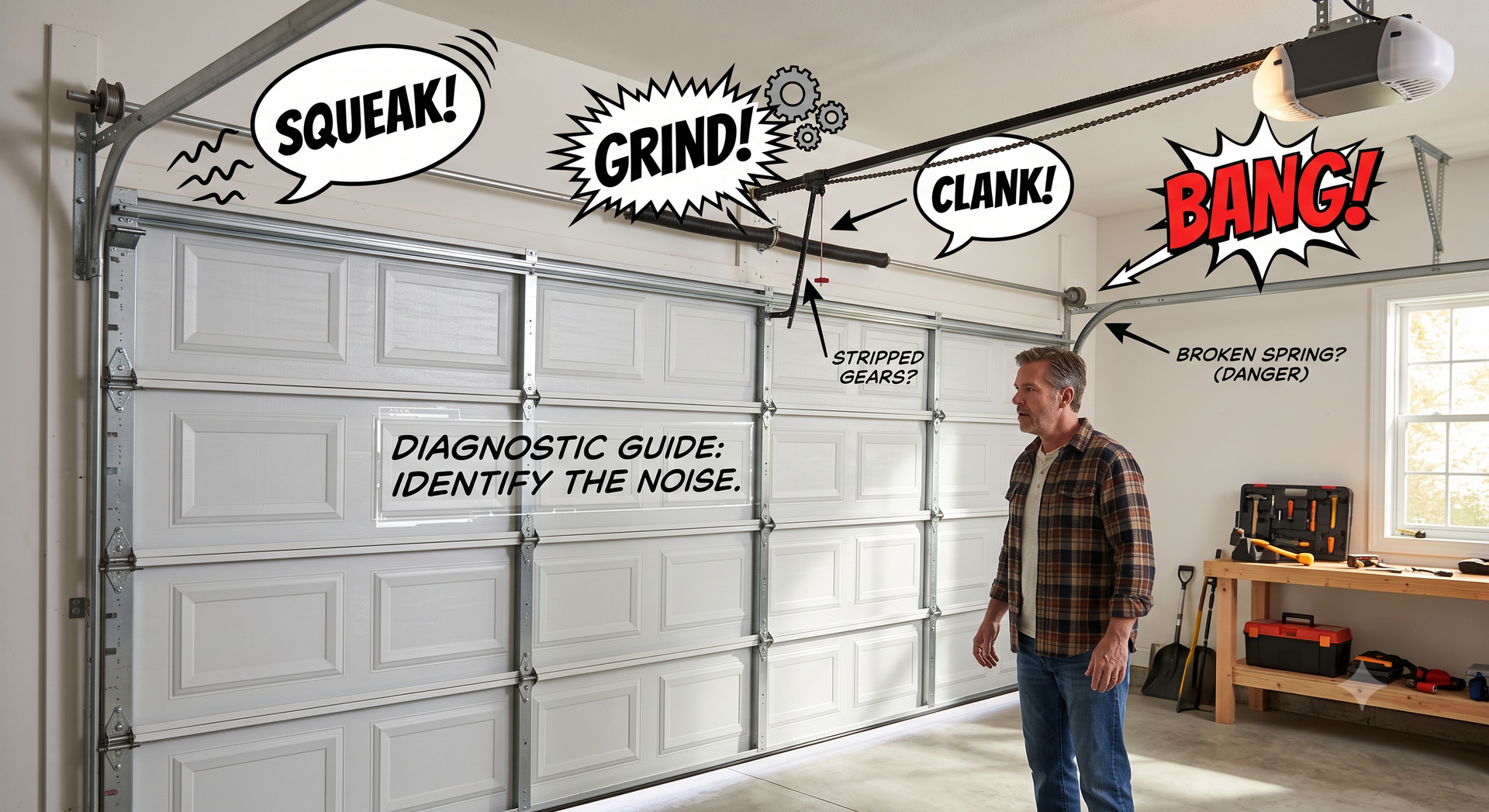
motor making a horrific grinding noise, step away from the door. These components are under extreme mechanical tension and can be incredibly dangerous to handle without the right tools and training.
Give our team a call, and we’ll send a technician over to diagnose the issue safely, affordably, and fast!