Beats the Heat: How Plano’s Extreme Summers Impact Your Garage Door Opener
Anyone who has lived through a North Texas summer knows that the heat doesn't just make stepping outside uncomfortable—it puts a massive strain on your home’s mechanical systems. While we often worry about our AC units, there’s another hardworking piece of equipment quietly baking in your garage:
your garage door opener.
When temperatures outside hit triple digits, the temperature inside a closed, uninsulated garage in Plano can easily soar past 120°F.
At
A1 Affordable Garage Door Repair in Plano, we see a major spike in service calls from West Plano to the East side every July and August. Here is exactly how that intense Texas heat affects your garage door opener—and what you can do to prevent a sudden breakdown.
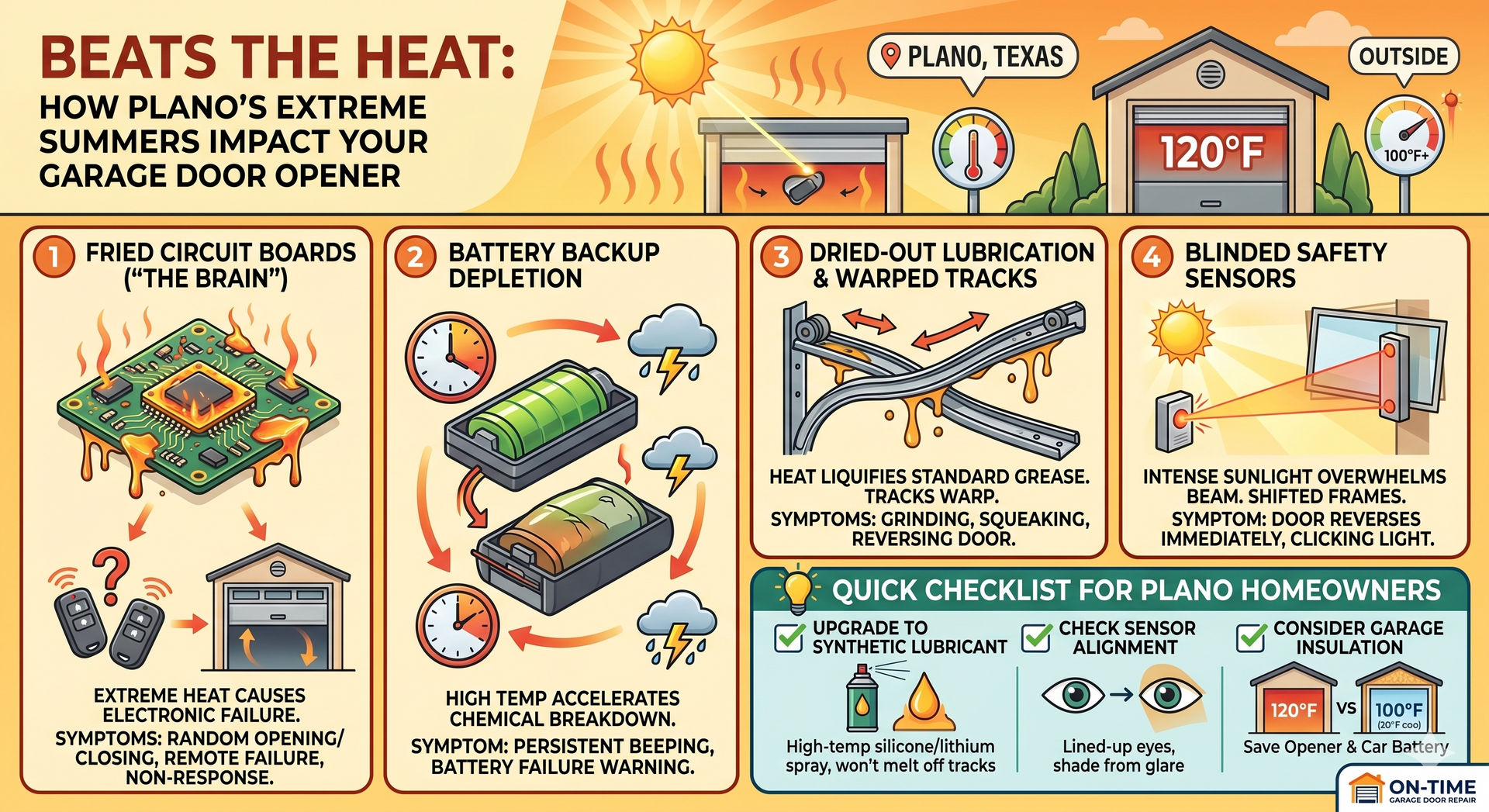
1. Fried Circuit Boards (The Opener’s "Brain")
Modern garage door openers are essentially smart computers. They rely on delicate circuit boards to receive signals from your remote, manage safety sensors, and control the motor.
- The Problem: Extreme heat is the natural enemy of electronics. Prolonged exposure to 120°F+ garage temperatures can cause the solder joints on the circuit board to expand, crack, or melt.
- The Symptom: Your garage door might start opening or closing on its own, the remotes might suddenly stop working, or the opener may fail to respond entirely.
2. Battery Backup Depletion
Texas storms can knock out power in a flash, which is why Texas law requires many newer garage door installations to include a battery backup system.
- The Problem: High temperatures accelerate the chemical degradation inside rechargeable batteries. Intense heat significantly shortens the overall lifespan of your opener's backup battery.
- The Symptom: You’ll hear a persistent, annoying beeping sound coming from your opener unit. This is the system warning you that the battery can no longer hold a charge and needs to be replaced.
3. Dried-Out Lubrication and Warped Tracks
Your garage door opener doesn't lift the door alone; it relies on a system of tracks, rollers, and springs. The hotter it gets, the harder the opener has to work to move these parts.
- The Problem: Standard garage door grease can liquefy and drip off the tracks and rollers under intense heat. Without proper lubrication, friction increases. Furthermore, the metal tracks can slightly expand and warp in the heat.
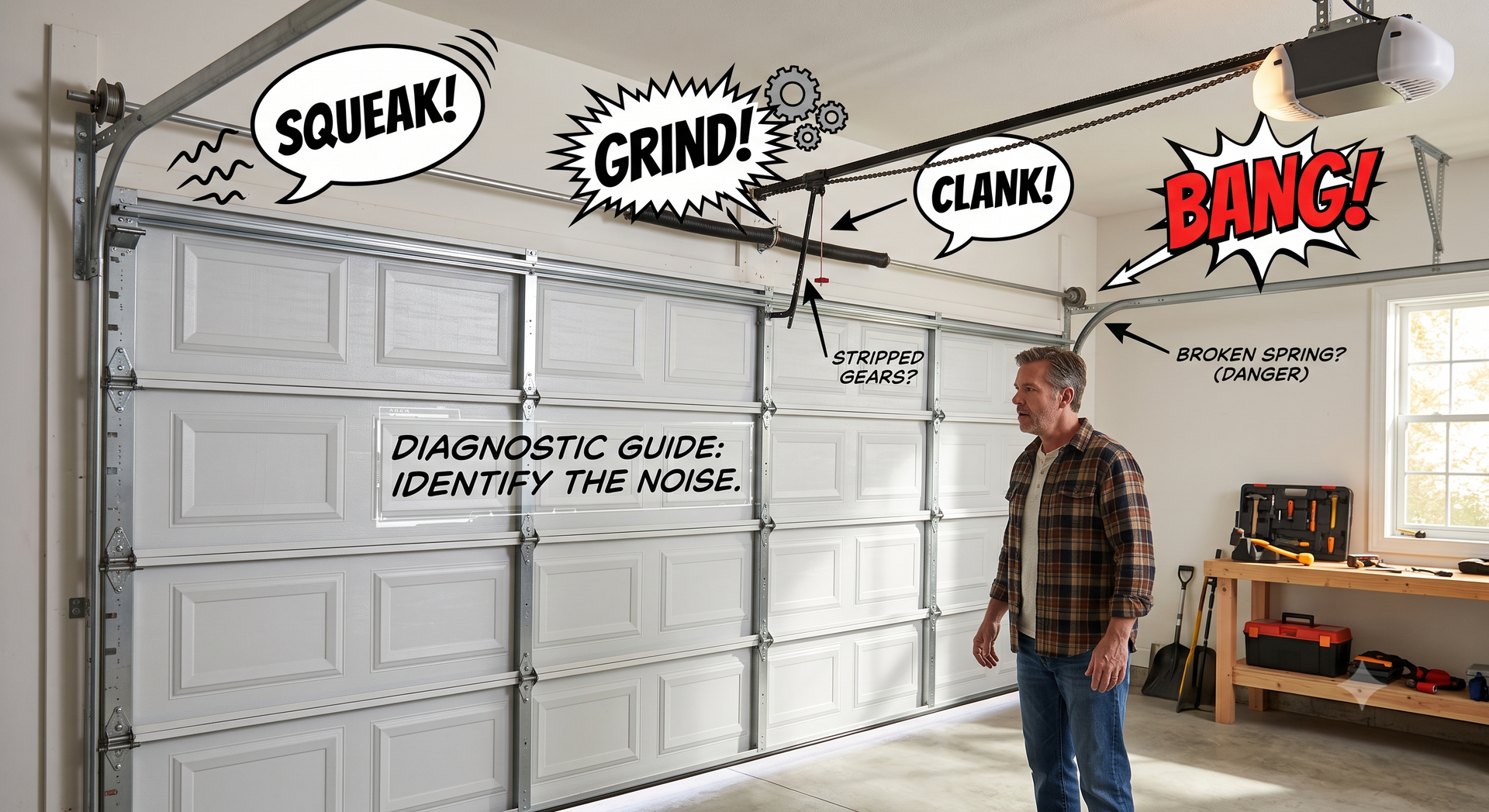
- The Symptom: You’ll hear grinding, squeaking, or scraping noises. If the opener detects too much resistance because of dried tracks, its safety mechanism will trigger, causing the door to reverse halfway through closing.
4. Blinded Safety Sensors
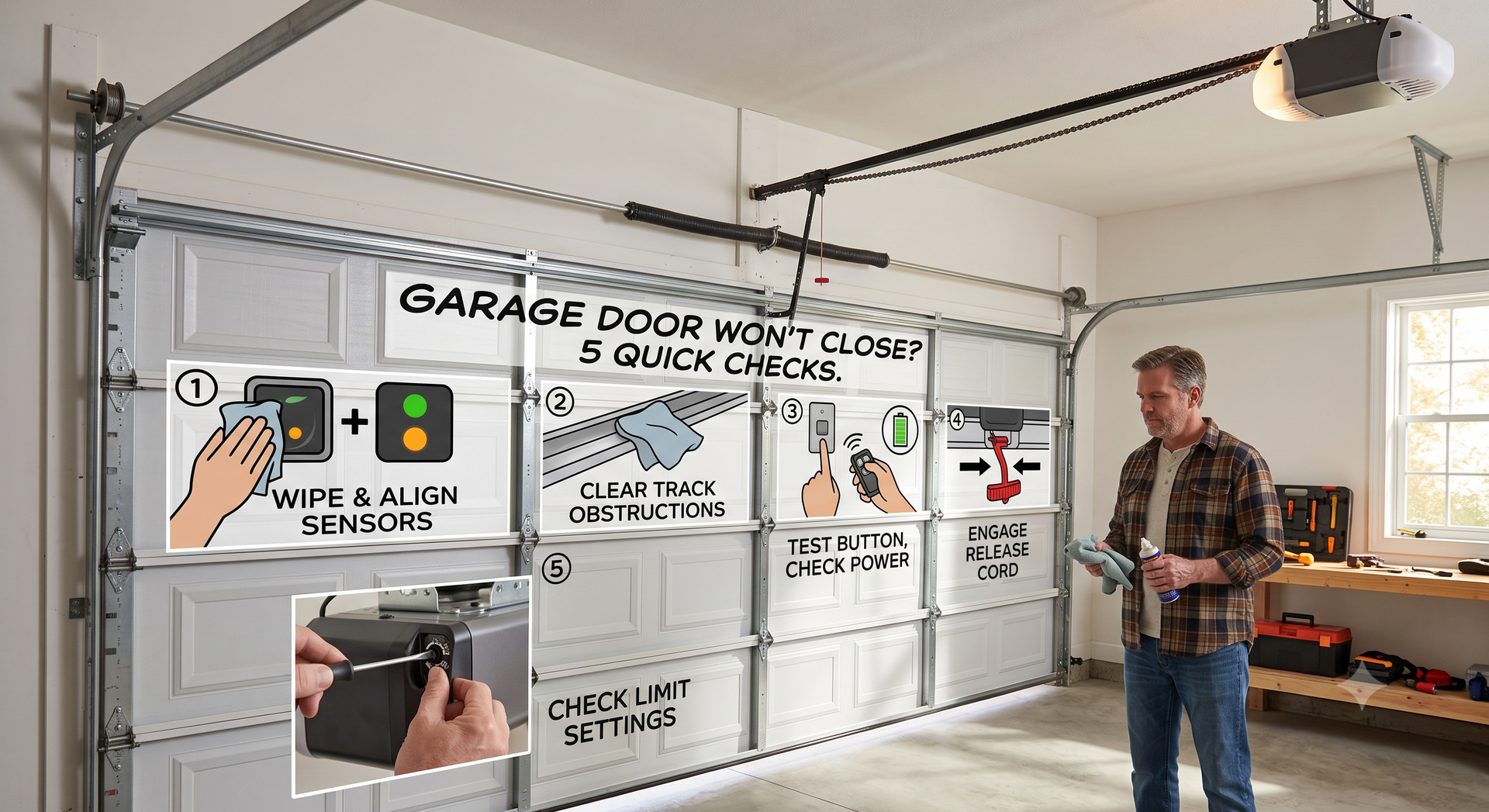
Have you ever tried to close your garage door in the middle of a blazing Plano afternoon, only for it to immediately open back up with the light clicking?
- The Problem: Direct, intense sunlight can overwhelm the infrared sensors at the base of your garage door. Additionally, extreme heat can cause the wooden or metal frames holding the sensors to shift slightly.
- The Symptom: The opener thinks there is an object blocking the door when it’s actually just a blast of Texas sunshine blinding the infrared beam.
💡 Quick Checklist for Plano Homeowners
Want to protect your system before the next heatwave hits? Try these three steps:
- Upgrade to Synthetic Lubricant: Switch out standard grease for a high-temperature silicone or lithium-based spray that won't melt off the tracks.
- Check the Sensor Alignment: Ensure your safety eyes are perfectly lined up and shaded from direct afternoon sun glare.
- Consider Garage Insulation: Insulating your garage door can lower interior garage temperatures by up to 20 degrees, saving both your opener and your car's battery.
Stuck in the Heat? We’re Right Around the Corner.
If your garage door opener is making strange noises, reversing for no reason, or refusing to budge after a blistering summer day, don't trap your car inside.
Whether you are over near the Shops at Legacy, living in Willow Bend, or down near Historic Downtown Plano, our local technicians are ready to help.
Give
A1 Affordable Garage Door Repair Services a call today