7 Warning Signs Your Garage Door Springs Are About to Break (And Why You Can't Ignore Them)

April 12, 2026

7 Warning Signs Your Garage Door Springs Are About to Break 

Most homeowners assume the motorized opener is what lifts their garage door. In reality, the opener just guides it. The true heavy lifters of your garage door system are the springs.

Garage door springs are under immense, constant tension. They counterbalance the massive weight of the door, allowing it to glide up and down smoothly thousands of times over their lifespan. But because they endure so much stress, they eventually wear out.

When a spring snaps, it isn't just an inconvenience—it can cause catastrophic damage to your door, destroy your opener, and pose a severe physical danger to anyone nearby. Fortunately, springs rarely fail without giving you a heads-up.

Here are the seven most common warning signs that your garage door springs are on their last legs.


1. The Door Feels Unusually Heavy (or Looks Crooked)

Garage door springs are calibrated to make a 200-pound door feel like it weighs about 10 pounds. If a spring is failing and losing its tension, that weight will suddenly return.

  • What to look for: If you pull the emergency release cord and try to lift the door manually, it feels incredibly heavy or completely dead weight.
  • The visual cue: The door sags noticeably on one side when opening or closing. This usually means one spring has weakened or broken while the other is still trying to do the work.


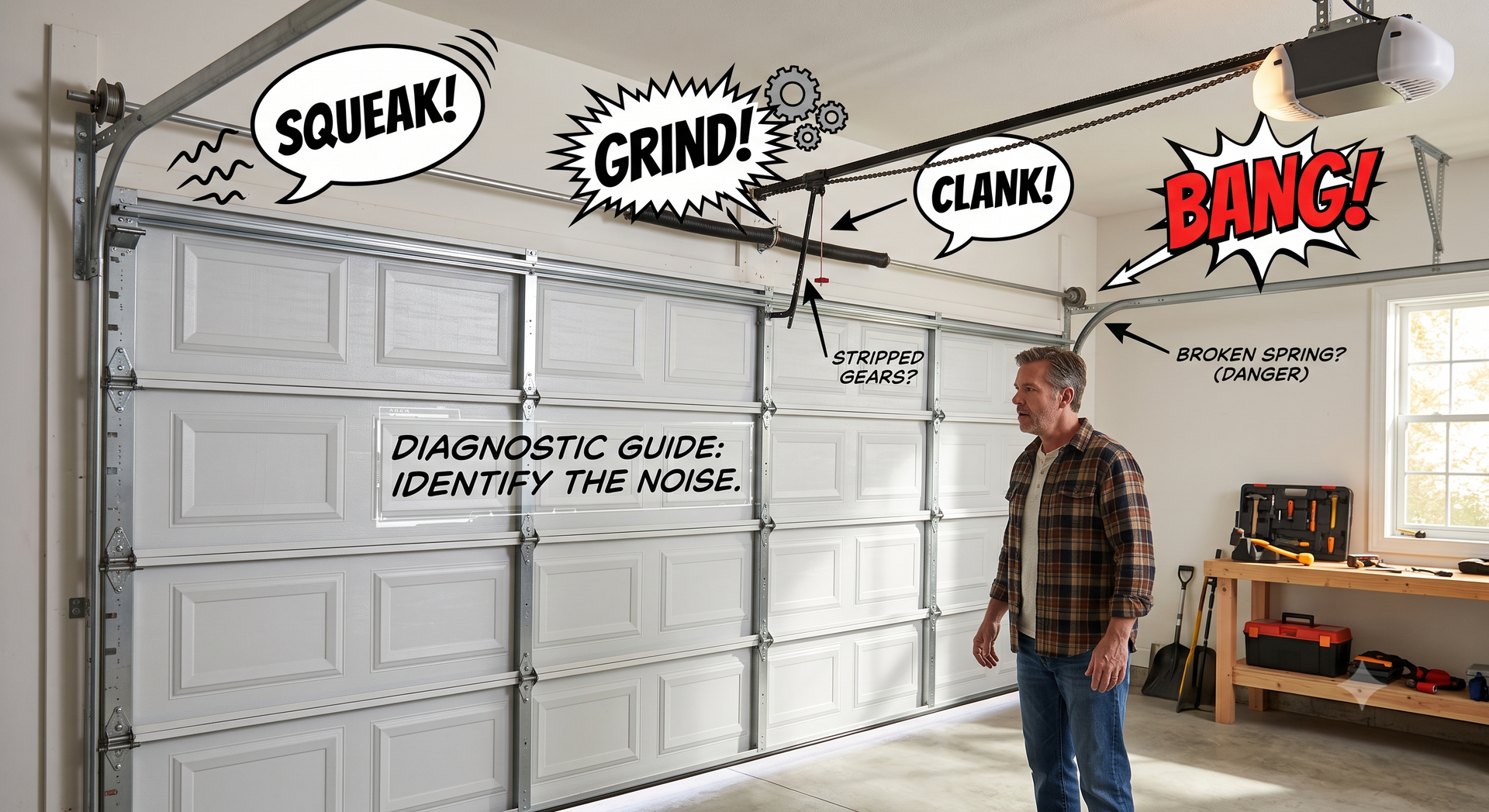
2. Loud Bangs, Squeaks, or Grinding Noises

While garage doors are naturally a bit noisy, you should always pay attention to new, alarming sounds.

  • What to listen for: High-pitched squeaking, intense creaking, or a grinding noise as the metal coils rub together awkwardly.
  • The ultimate red flag: A sound like a loud gunshot or a firecracker from the garage. This is the unmistakable sound of a torsion spring snapping violently under pressure. If you hear this, do not attempt to open the door.


3. Sluggish, Jerky, or Hesitant Movement

A healthy spring system allows your door to move in one fluid, continuous motion. As springs fatigue and lose their elasticity, the door's movement will suffer.

  • What to look for: The door stutters, shakes, or moves much slower than it used to. It might seem like it's "catching" on something invisible as it travels up or down the tracks.


4. Visible Gaps in the Spring Coils

You don't always have to wait for a performance issue; sometimes, a simple visual inspection will tell you everything you need to know.

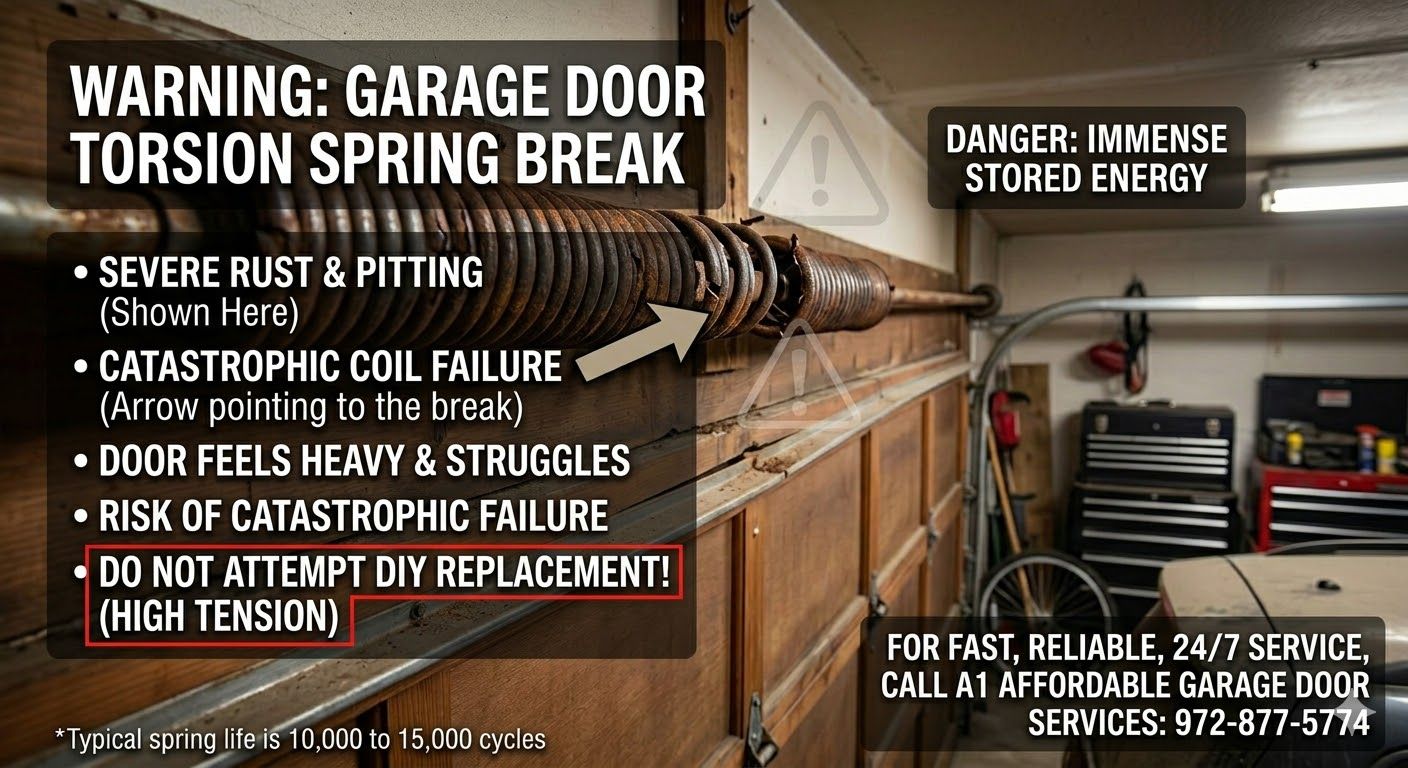
  • What to look for: Look up at the torsion spring (the long coil mounted horizontally above the closed door). If you see a distinct gap of a few inches dividing the spring into two pieces, the spring is completely broken.
  • Other signs: Heavy rust, deep corrosion, or visible fraying on extension springs (the springs that run along the upper tracks) mean their structural integrity is compromised.


5. The Door Only Opens Partially (Or Slams Shut)

Springs provide the lifting power and the controlled resistance needed to let the door down gently. Without them, gravity takes over.

  • What to look for: The opener lifts the door a few feet off the ground and then gives up, stopping completely.
  • The "Guillotine" Effect: Worse, when the door is closing, it drops much faster than normal or outright slams into the concrete. This is highly dangerous and means the springs are providing zero resistance.


6. Your Opener is Struggling or Burning Out

Springs provide the lifting power and the controlled resistance needed to let the door down gently. Without them, gravity takes over.

  • What to look for: The opener lifts the door a few feet off the ground and then gives up, stopping completely.
  • The "Guillotine" Effect: Worse, when the door is closing, it drops much faster than normal or outright slams into the concrete. This is highly dangerous and means the springs are providing zero resistance.


7. They Are Past Their Expiration Date

Garage door springs don't last forever. They are rated by "cycles" (one cycle equals one full opening and closing of the door).

  • The timeline: Most standard builder-grade springs are rated for 10,000 cycles. For a family that uses their garage door as their primary front door (opening it 3 to 5 times a day), those springs will typically last 7 to 10 years.
  • The takeaway: If you know your springs are around a decade old, it is significantly cheaper and safer to replace them proactively rather than waiting for them to snap and trap your car inside.


WARNING: Never Attempt DIY Spring Repair

Garage door springs hold a massive amount of stored kinetic energy. If handled improperly, or if the wrong tools are used, a spring can snap and cause severe lacerations, broken bones, or worse.


Spring replacement is strictly a job for trained professionals with the right equipment.

Protect Your Home and Your Family


Paying attention to these warning signs can prevent unexpected breakdowns, serious injuries, and costly secondary damage to your garage door system.


Are you hearing strange noises or dealing with a heavy, struggling garage door? Don't wait until a spring snaps completely. The experts at A1 Affordable Garage Door Services are ready to help.

Call us today at 972-877-5774 or schedule your inspection online to get fast, reliable, 24/7 service in Plano, Frisco, McKinney, Allen, Dallas, and the surrounding North Texas communities!


..
6 Warning Signs Your Garage Door Motor is Failing
March 29, 2026
Dealing with a broken garage door is incredibly frustrating and can pose a serious safety hazard. The good news? Garage door openers rarely fail without warning. By recognizing the early symptoms of a failing motor, homeowners can avoid being trapped in their garages..
Garage door inspection for Texas homeowners
January 21, 2026
To keep your garage door working smoothly, maintenance is a must. Maintenance extends the life of your garage door—while helping you avoid expensive garage door repair.
Garage door repair - garage door opener replacement
January 13, 2026
The debate on the two most common garage door openers—belt vs chain—depends solely on your home and specific needs. Let’s review the pros and cons of the belt and chain garage door opener to help you choose the best fit for your home.
Show More